Active Reading
Learning outcome #3 Active reading
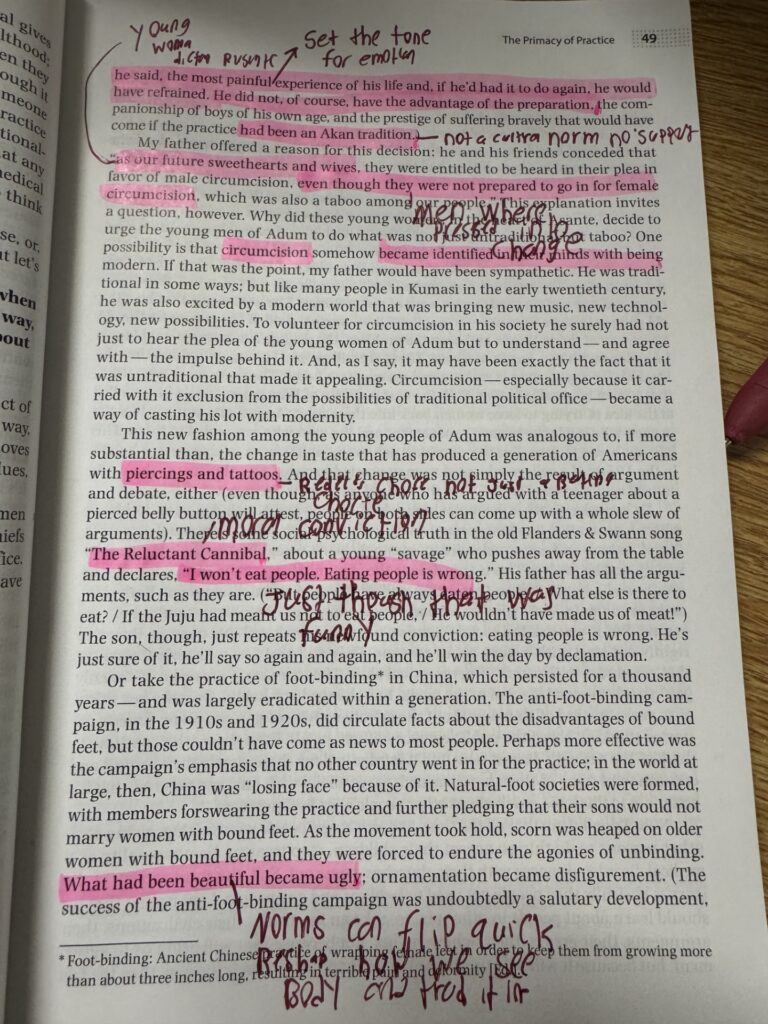
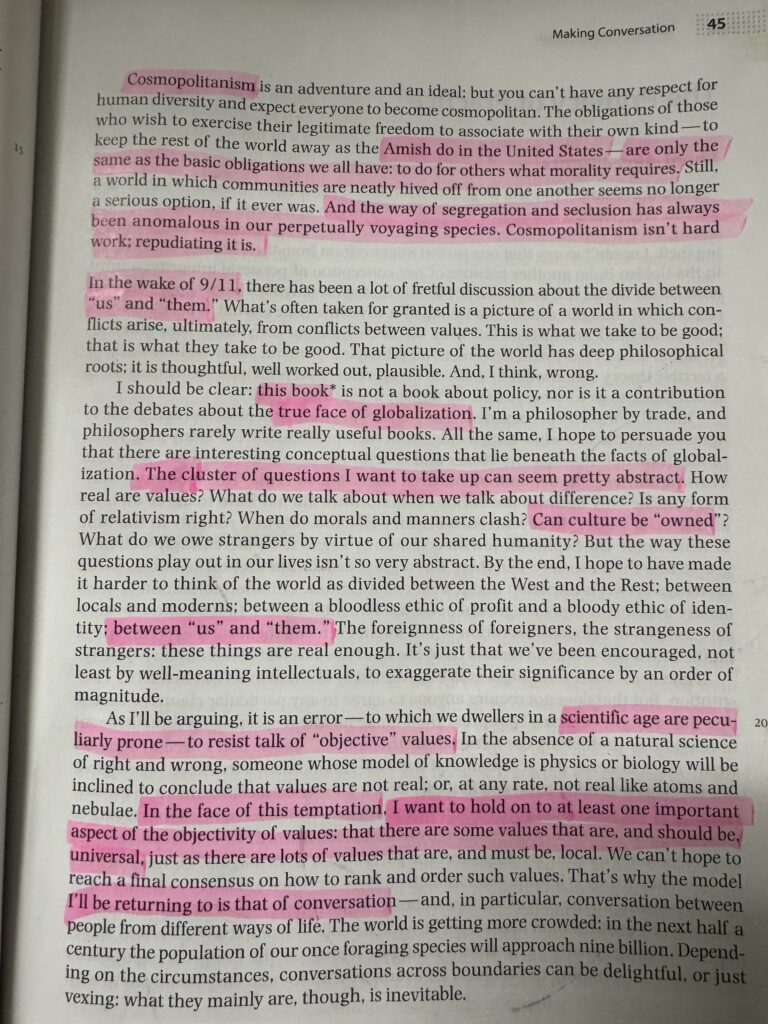
One example of challenging text that came up when I read Appiah’s argument that cosmopolitanism is more natural to humanity than seclusion: “Cosmopolitanism isn’t hard work; repudiating it is.” I did highlight that statement and “But isn’t true cosmopolitanism difficult in a world of inequality and nationalism?” This helped me question the idea is cosmopolitanism is effortless, like he said, especially when cultural mixing can be met with resistance or even violence. This annotation led me to question the author’s optimistic framing and dig deeper into the practical challenges of cosmopolitan ideals.
An example of understanding annotation was when I highlighted some values that are, and should be, universal. I wrote that he is making room for both universal morals and cultural differences. This helped clarify Appiah’s nuanced position, not purely relative but not absolutely either, which was intimately confusing when I was first trying to make sense of it.
Finally, when I was reading, I came to a line about conversation being inevitable in a crowded world. I noted how this applies to immigration debates. This made me think beyond the text, making me make connections between intercultural dialogue and political issues
Through my time annotation on this page, I moved away from passive reading to actively analyzing. I developed a more critical perspective on the tension between global and local identities, which helped me understand the deeper message of the text that living together in diversity requires effortful conversation, not easy answers
Link to active reading notes
Second active reading \